Indications, Limitations, and Statement of Non-Indication
setting things straight
This document states the indications and, more importantly, the explicit non-indications for one appliance design within the ALF family: the ALF for Trauma Release.
It exists because a single design being applied outside its intended purpose is the most common source of both poor outcomes and legitimate criticism of ALF Therapy. Where an appliance is used for something it was not designed to do, the resulting failure is a failure of application, and it should be possible for any clinician — including one who has never taken a course with us — to establish that by reading a public document. That applies equally to instruction. Where the design is taught as an expansion appliance, the misapplication begins in the classroom.

What it is...and is not.
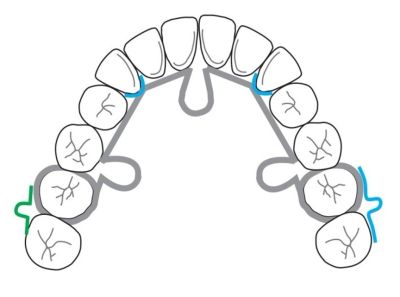
A wire based dental device placed on the roof of the mouth near the gumline of the upper teeth
Not intended for palatal expansion or tooth movement.
a device that includes crescent shaped wires on the lingual of the upper cuspids
Not to be compared with devices used for tooth movement. If a design with cuspid crescents has been or is being utilized with the goal of tooth movement or arch development, it is being used against the stated indications for its proper utilization.
Intended to work through neurological input rather than mechanical force
Should not be used by providers without proper training.
A tool to support improved oral function
Taught with defined case-selection criteria and stated non-indications. Where this design is taught as an expansion or tooth-movement appliance, it is being taught outside the purpose it was designed for, and the outcomes that follow are a predictable result of that instruction rather than of the appliance.